Data Downtime: Microsoft Outage Underscores Cloud Reliability for African Enterprises
Microsoft's recent global outage highlights critical lessons for African data leaders on cloud reliability, business continuity, and building resilient data…
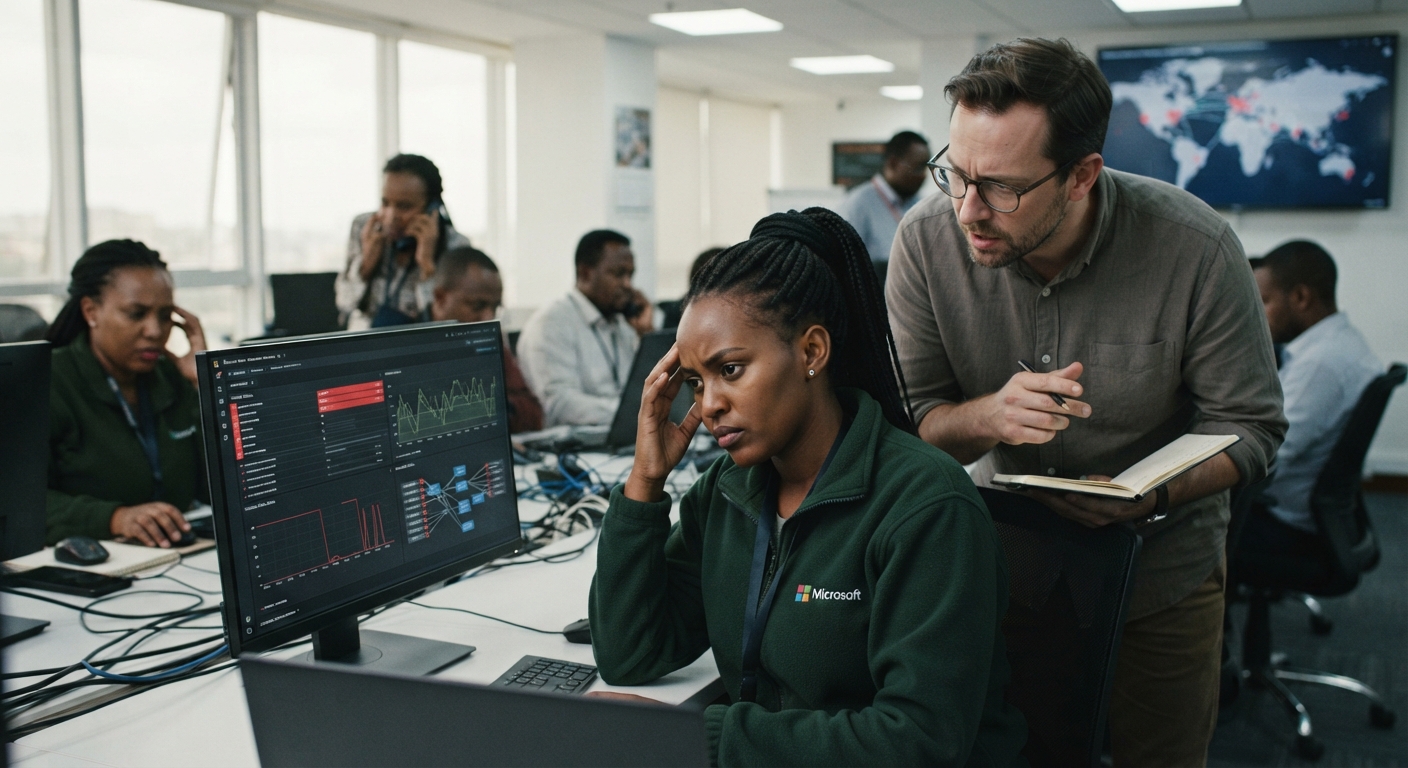
A recent global service disruption experienced by Microsoft, attributed to a "network capacity upgrade," has served as a potent reminder of the inherent vulnerabilities within even the most sophisticated cloud infrastructures. While Microsoft quickly moved to apologize and clarify the issue was "not related to cyber or AI/agents," the incident provides crucial lessons for data leaders, analysts, and engineers across Africa who are increasingly reliant on cloud platforms to power their data-driven organisations.
Unpacking the "Technical Issue"
Microsoft described the widespread outage as a "technical issue" stemming from a network capacity upgrade. Such an explanation, while seemingly benign, points to the complex interplay of components within a global cloud ecosystem. Even routine maintenance or infrastructure enhancements, when not executed flawlessly, can trigger cascading failures across interconnected services. For organisations leveraging Microsoft Azure, this meant potential disruptions to everything from productivity suites and collaboration tools to critical data pipelines, analytics platforms, and machine learning workloads. The rapid recovery reported by Microsoft is a testament to their operational capabilities, yet the initial downtime highlighted the single points of failure that can emerge within hyper-scale cloud environments.
Critically, the explicit denial of a cyber-attack or AI-related failure alleviates certain concerns, but it shifts the focus to fundamental infrastructure reliability. It underscores that even without malicious intent, the sheer complexity and scale of modern cloud operations present their own set of challenges, demanding meticulous planning and robust failover mechanisms.
The Africa Angle
For Africa's rapidly evolving data landscape, incidents like Microsoft's outage carry particular weight. As digital transformation accelerates across the continent, African enterprises are increasingly migrating their core data infrastructure, applications, and analytics capabilities to global cloud providers. This adoption is driven by the promise of scalability, cost-efficiency, and access to advanced data science tools – advantages often more readily available via cloud than through on-premise solutions in many regions.
However, this growing reliance also introduces new risks. Data leaders in Africa must critically evaluate their cloud strategies, moving beyond simple adoption to robust resilience planning. Connectivity challenges in some parts of the continent can exacerbate the impact of global outages, making local redundancy and offline capabilities more crucial. Furthermore, building trust in digital services is paramount for sustained growth. Any disruption, even from a global vendor, can ripple through nascent digital economies, affecting everything from financial services to healthcare.
This incident compels African organisations to:
- Diversify Cloud Strategies: Explore multi-cloud or hybrid-cloud approaches to avoid vendor lock-in and enhance resilience.
- Strengthen Business Continuity Planning (BCP): Develop and regularly test BCP and disaster recovery (DR) protocols that account for cloud provider outages.
- Understand Service Level Agreements (SLAs): Scrutinize SLAs with cloud providers, understanding recovery time objectives (RTOs) and recovery point objectives (RPOs) for critical data and applications.
- Invest in Observability: Implement comprehensive monitoring tools to quickly detect and diagnose issues, even when they originate from upstream cloud services.
Building for Resilience in a Cloud-First World
Microsoft's recent service interruption is a stark reminder that no system, no matter how advanced, is entirely immune to disruption. For data leaders and engineers in Africa, this isn't merely news; it's a call to action. It reinforces the imperative to design data architectures with inherent resilience, anticipating potential failures and building safeguards at every layer. Embracing strategies like geo-redundancy, data replication across different regions or providers, and robust backup mechanisms are no longer luxuries but foundational necessities.
Ultimately, the goal is to ensure uninterrupted access to critical data and analytical capabilities, safeguarding business operations and maintaining stakeholder trust. As Africa continues its journey towards data-driven economies, learning from global incidents and proactively hardening local infrastructure and strategies will be key to sustainable digital growth.
Source: Techmeme: Data

ByteDance's $400B Valuation Reshapes Global Data Benchmarks
ByteDance's impressive $400B valuation and $6B buyback set new benchmarks for data-driven success. Discover what this means for Africa's data leaders and tech…

Data Dynamo's Dilemma: White House Weighs In on Nvidia Leadership
President Trump's intervention in Nvidia's leadership saga signals deep governmental interest in critical tech. Discover why this global tech drama matters for

AI Deepfakes Fuel $400M Crypto Heist: A Warning for African Data Leaders
North Korean hackers used AI deepfakes in a $400M crypto heist. Discover why this sophisticated threat demands heightened cybersecurity vigilance from African…